
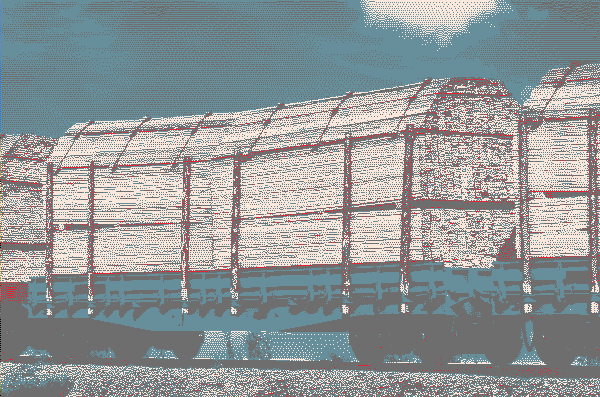
Logistics is one of the best weapons of capitalist firms against workers
The ability to produce and sell anywhere in the world allows them to bypass environmental and social regulations. With the EU-MERCOSUR agreement, for example, companies and states will be able to import agricultural products produced on stolen and deforested land. Much of the lithium in our computers and car batteries comes from Argentina, where the industry steals water and land from indigenous communities. The variable respect for human rights depending on the country enables relocations to stifle any social conflict.
Logistics dispossesses us of all collective power over the economy
Supply chains have become so complex that companies can evade any responsibility for their suppliers. For instance, the production of a smartphone requires nearly 6,000 intermediaries. This is how components theoretically intended for electronics can be “laundered” by passing through several countries, only to end up in drones intended to kill Palestinians.
Logistics implies colonial exploitation
Transporting plundered resources, enslaved people, and armies to different parts of the globe. For example, the Belgian company Umicore is one of the world’s leading players in metal recycling and battery material production. Since Belgium established control over the Congo at the end of the 19th century, it has been active in the extraction and processing of raw cobalt. Working conditions in the mines are considered human rights violations (dangerous conditions, child labor).
Logistics means terrible working conditions
Logistics jobs are the new working-class jobs, which is partly why they are being established in former industrial basins in Belgium. Workers are poorly paid, heavily monitored, and develop musculoskeletal disorders. Currently, the Arizona government is lifting bans on night work, holiday and Sunday work, as well as night premiums for logistics workers.
Ever larger and more destructive infrastructures
Transporting more and more goods requires roads, ports, canals, and warehouses. In Liège, land is being swallowed up by new Alibaba warehouses. In Antwerp, the port has been expanding for decades, and the surrounding land is becoming uninhabitable due to salinization. Our enormous road network must be maintained because trucks quickly destroy it, which absorbs a large part of the minerals extracted in Belgium.
Logistics is speculations’ best friend
It allows for the storage of goods and their transportation when they are most expensive. The “energy crises” and “food crises” we have experienced in recent years stem from capitalists’ control over the transport of goods.