

Against the Flow

A campaign against logistics in Belgium

Category: Uncategorized

Ida Wells

  • What is Against the Flow?

    What is Against the Flow?

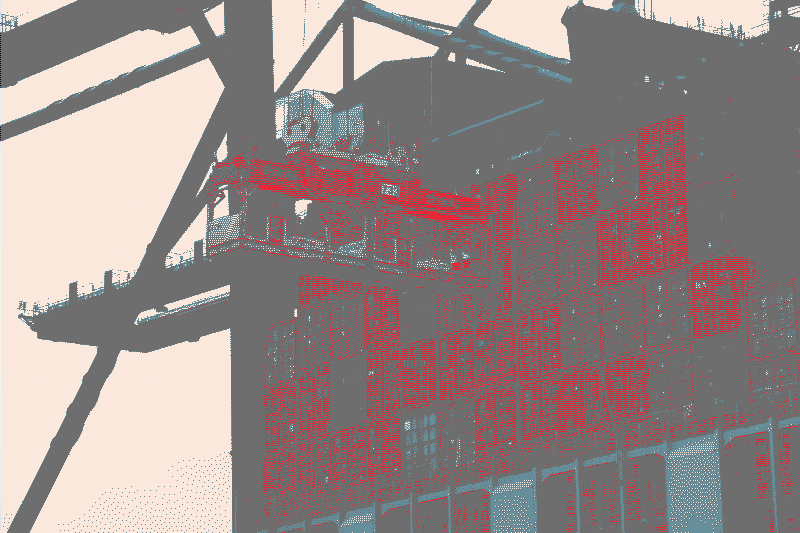
    Against the Flow is a collective framework established by several people and organisations to fight against the logistics empire in Belgium, which meets four needs.

    1. Investigate the logistics empire in Belgium.

    Belgium is located at the centre of Europe’s major industrial production and consumption hubs, which attracts the largest flows of goods in the region. The Walloon and Flemish governments are aware of this and base a large part of their economic strategy on increasing these flows. The country is home to some of Europe’s largest industrial ports, an extensive network of canals and a dense road network.

    2. Facilitate cooperation and mutual aid

    Between groups from different activist cultures on actions against logistics: anarchists and communists, the climate movement, struggles against development projects, neighbourhood committees, the pro-Palestinian movement, workers’ collectives, etc.

    3.Design actions against the EU logistics empire

    European transport networks are designed in Brussels, and Belgium has a special place in this. Due to its geography and central location, most of the flows that pass through Belgium are destined for France or Germany, which means that solidarity with comrades internationally must be taken into account.

    4. Foster a culture of blocking and disrupting flows

    Against the Flow is a campaign

    It is a step towards experimenting with modes of action and normalising reflection on logistics in social movements. No one is an ATF activist; we do not want to create a new organisation. We hope that this will allow us to remain open to encounters and initiatives.
  • Why fight against the Logistics Empire ?

    Why fight against the Logistics Empire ?

    Logistics is one of the best weapons of capitalist firms against workers

    The ability to produce and sell anywhere in the world allows them to bypass environmental and social regulations. With the EU-MERCOSUR agreement, for example, companies and states will be able to import agricultural products produced on stolen and deforested land. Much of the lithium in our computers and car batteries comes from Argentina, where the industry steals water and land from indigenous communities. The variable respect for human rights depending on the country enables relocations to stifle any social conflict.

    Logistics dispossesses us of all collective power over the economy

    Supply chains have become so complex that companies can evade any responsibility for their suppliers. For instance, the production of a smartphone requires nearly 6,000 intermediaries. This is how components theoretically intended for electronics can be “laundered” by passing through several countries, only to end up in drones intended to kill Palestinians.

    Logistics implies colonial exploitation

    Transporting plundered resources, enslaved people, and armies to different parts of the globe. For example, the Belgian company Umicore is one of the world’s leading players in metal recycling and battery material production. Since Belgium established control over the Congo at the end of the 19th century, it has been active in the extraction and processing of raw cobalt. Working conditions in the mines are considered human rights violations (dangerous conditions, child labor).

    Logistics means terrible working conditions

    Logistics jobs are the new working-class jobs, which is partly why they are being established in former industrial basins in Belgium. Workers are poorly paid, heavily monitored, and develop musculoskeletal disorders. Currently, the Arizona government is lifting bans on night work, holiday and Sunday work, as well as night premiums for logistics workers.

    Ever larger and more destructive infrastructures

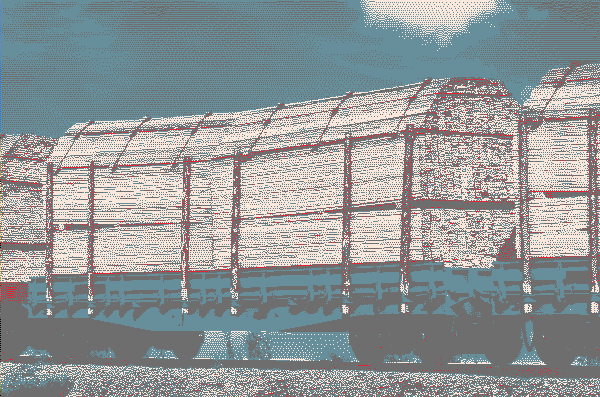
    Transporting more and more goods requires roads, ports, canals, and warehouses. In Liège, land is being swallowed up by new Alibaba warehouses. In Antwerp, the port has been expanding for decades, and the surrounding land is becoming uninhabitable due to salinization. Our enormous road network must be maintained because trucks quickly destroy it, which absorbs a large part of the minerals extracted in Belgium.

    Logistics is speculations’ best friend

    It allows for the storage of goods and their transportation when they are most expensive. The “energy crises” and “food crises” we have experienced in recent years stem from capitalists’ control over the transport of goods.

  • What is the Logistics Empire?

    What is the Logistics Empire?

    The “logistics revolution” of the 1970s shifted capital’s focus from the factories to where, when and how things move, which proved to be highly profitable. 

    Logistics is at the very heart of the global capitalist system, since it refers to the transportation of goods and services from point A to B. Highways, canals, industrial ports, landing strips and warehouses constitute some of the colossal infrastructure of the logistics industry. In Belgium, logistics activities occupy an area equivalent to about 25 times that of Brussels, which represents a significant portion of the entire territory.

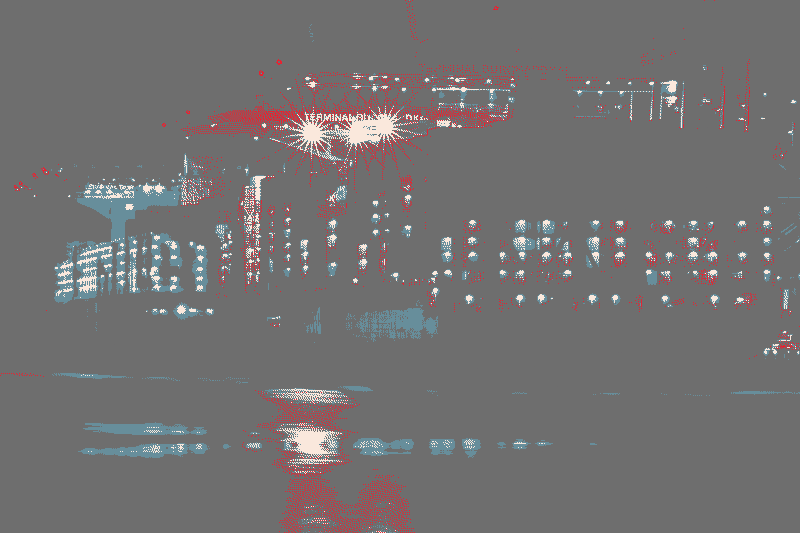
    The volume of commodities circulating is increasing globally. Since the beginning of the 21st century, the value of goods exchanged across the planet has tripled. Today, the Port of Antwerp handles 271 million tons of cargo a year, compared to 121 million tons in 2005.

    We coined the term Logistics Empire to refer to the sprawling networks of pillaging, landgrabbing, mass distribution of agro-industrial products and e-commerce, weapons circulation and so much more. Rather than being an apolitical science of management, we understand it as playing a direct role in relations of power, dispossession and the loss of our means of subsistence.